A chess school by Andrew Valentine
Scholarmate
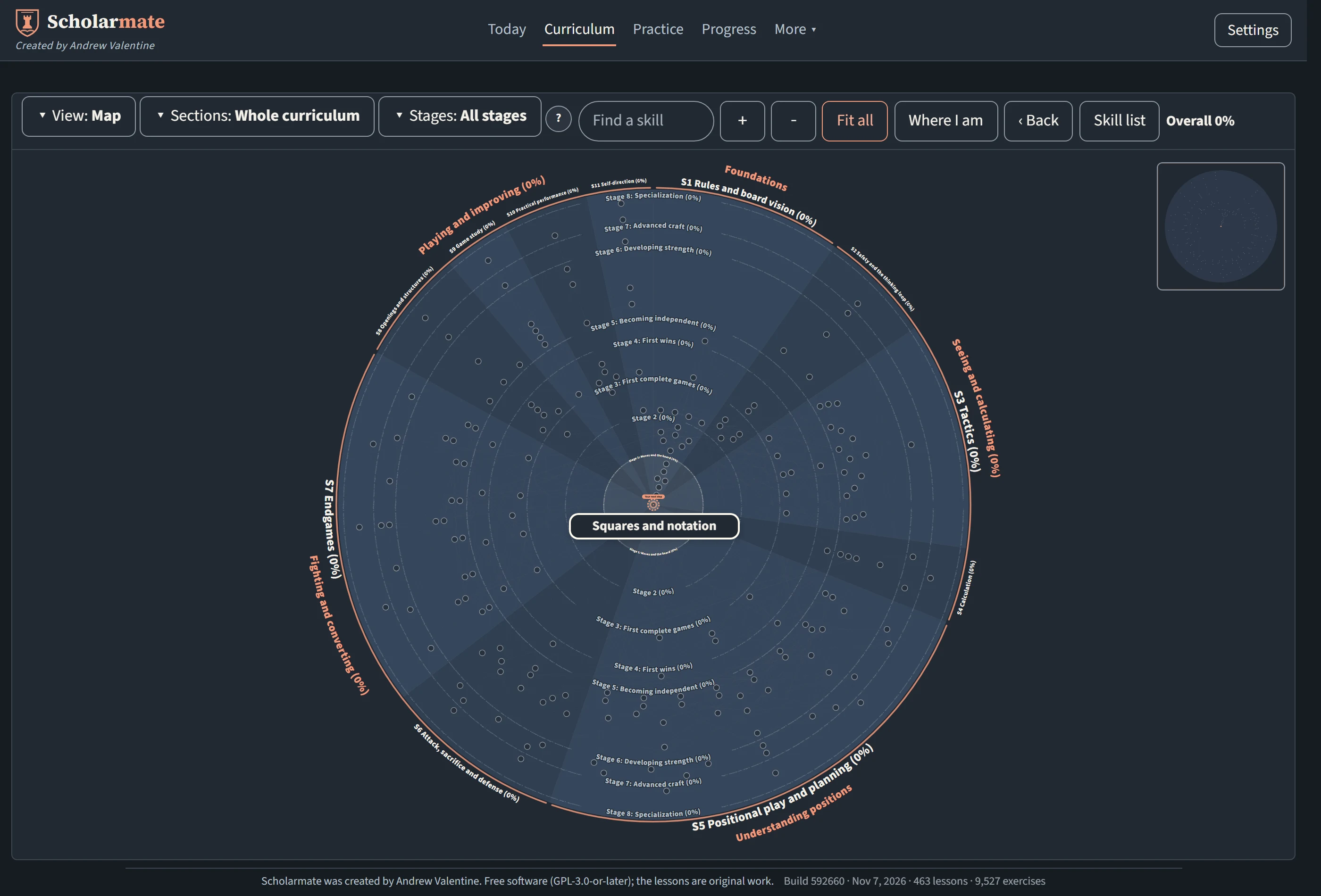
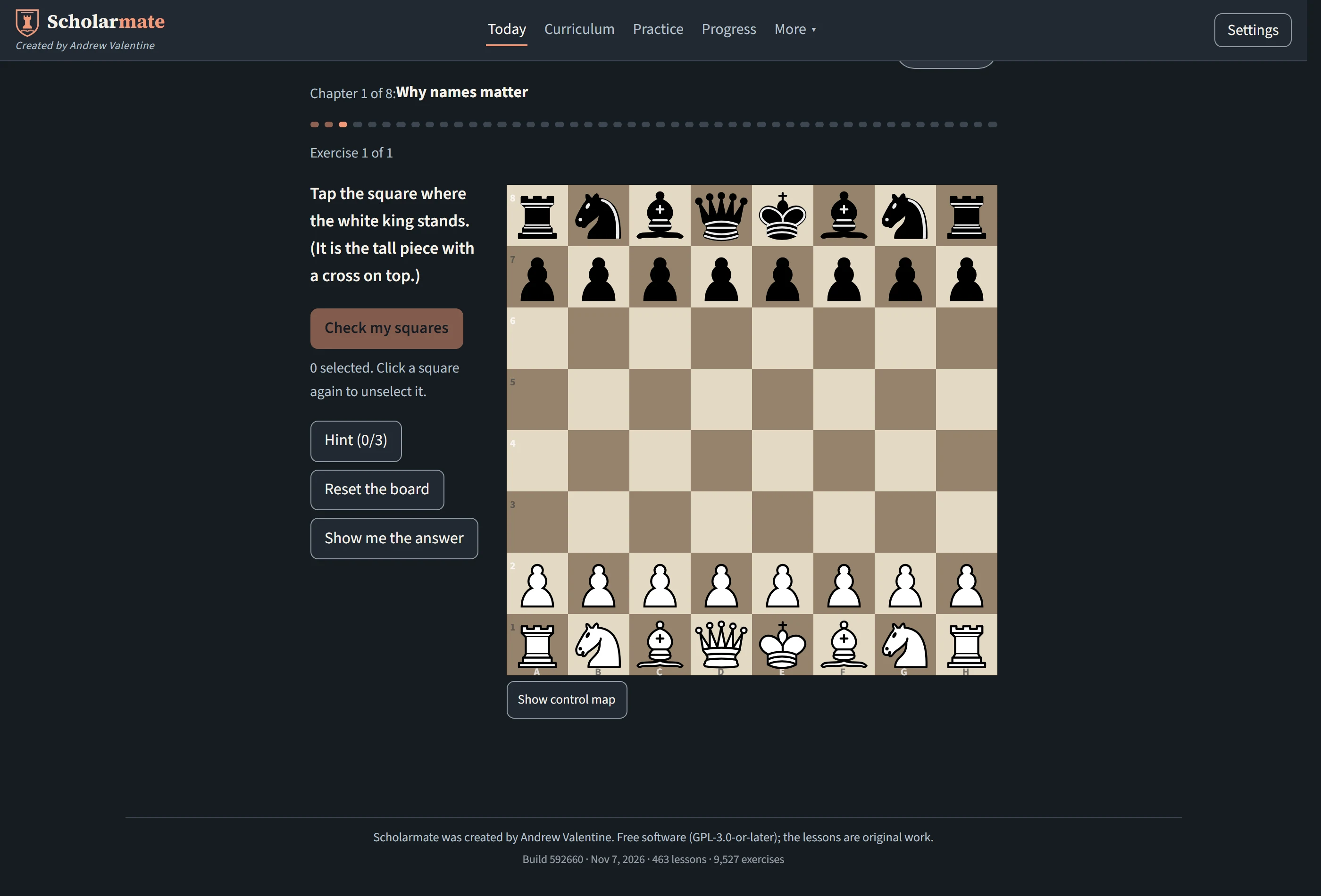
A free chess school that runs entirely in your browser — no account, no server, nothing to buy.
- Status
- Playable
- Role
- Design and direction
- Updated
- 2026-11-07
Why it exists
The argument
Chess teaching online is mostly a funnel. The lesson is free, the next lesson is not, and the thing you actually wanted — a straight path from knowing nothing to playing properly — is the part behind the subscription.
This is the whole course, free, with the source public. It is built on what other people have already given away: Stockfish for the engine, Chessground for the board, and Maia, the University of Toronto's human-like chess networks, for opponents who make the mistakes people actually make. Free for everyone is the point, not a trial.
It is open for beta testing now: usable end to end, and still being corrected.
Nothing is on your word alone
Every position the course teaches from is checked by an engine before it ships. The content build is strict about it: an item whose evidence no longer matches its own content is dropped from the build and listed, rather than published and hoped about.
That is the only honest way to do it. A chess lesson that is subtly wrong is worse than no lesson, because the student has no way to tell.
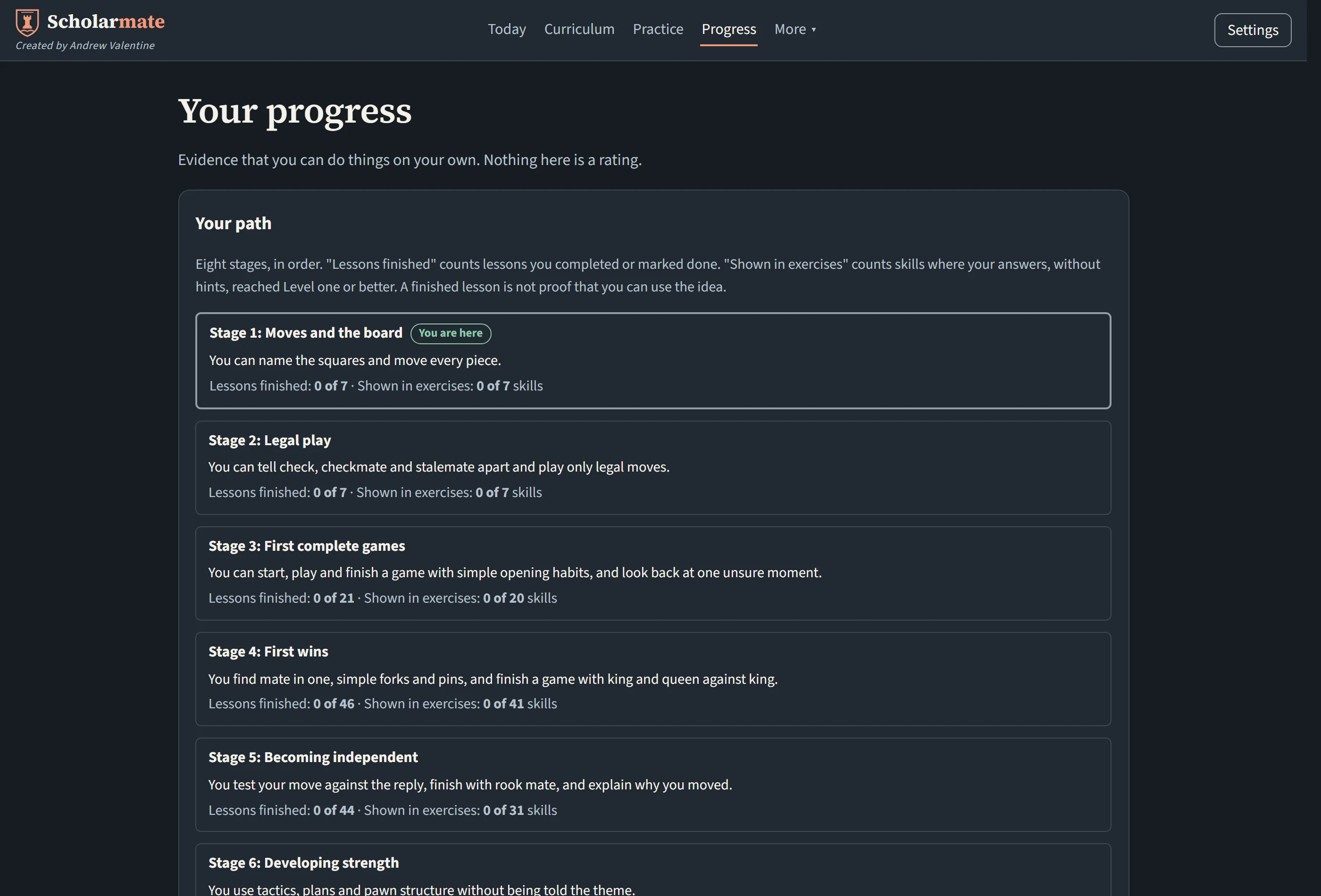
The same rule points at you. Ticking a lesson off changes the list and nothing else — it is not treated as evidence that you know the skill, because it is not evidence. Only what you can do on a board counts.
In order, and in the open
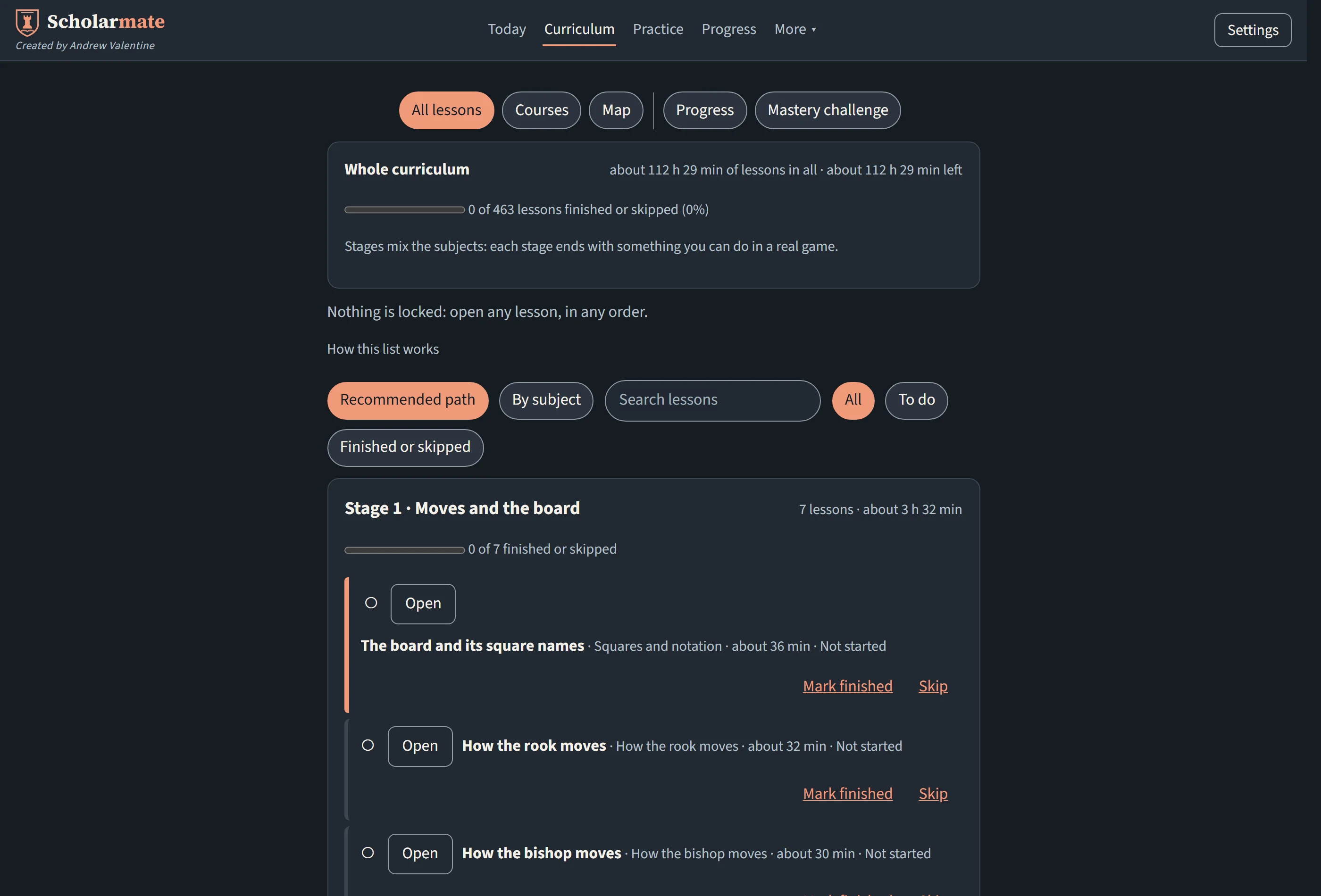
The curriculum is a graph rather than a playlist. Each lesson records what it depends on, so the course runs in an order that makes sense, in eight stages that each end with something you can do in a real game. Nothing is locked, so you can open any lesson, and you can see the whole thing at once on the radial map.
It is GPL-3.0-or-later and the source is public. Anyone can read what it teaches, check it, disagree with it, or run their own copy.
An opponent that plays like a person
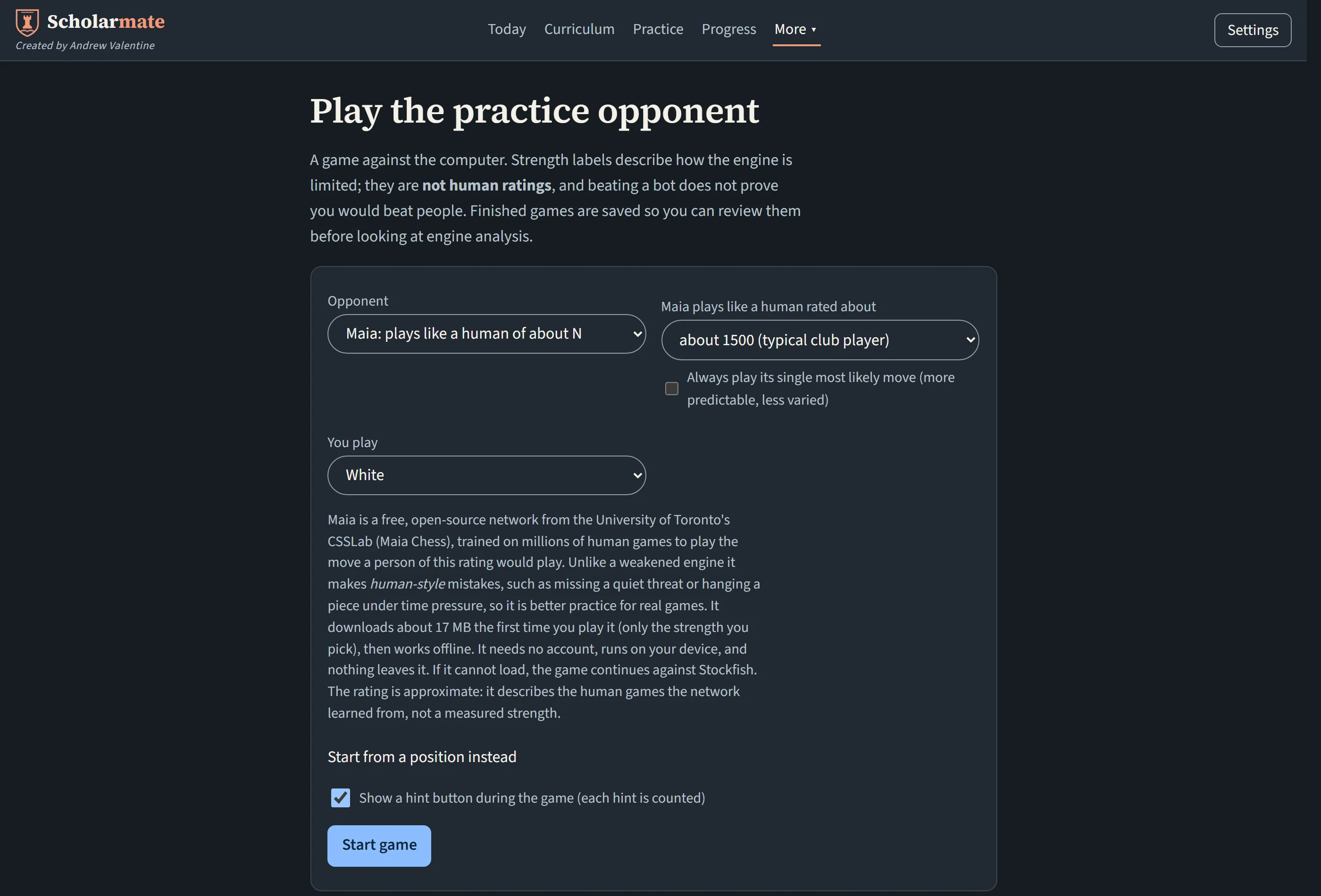
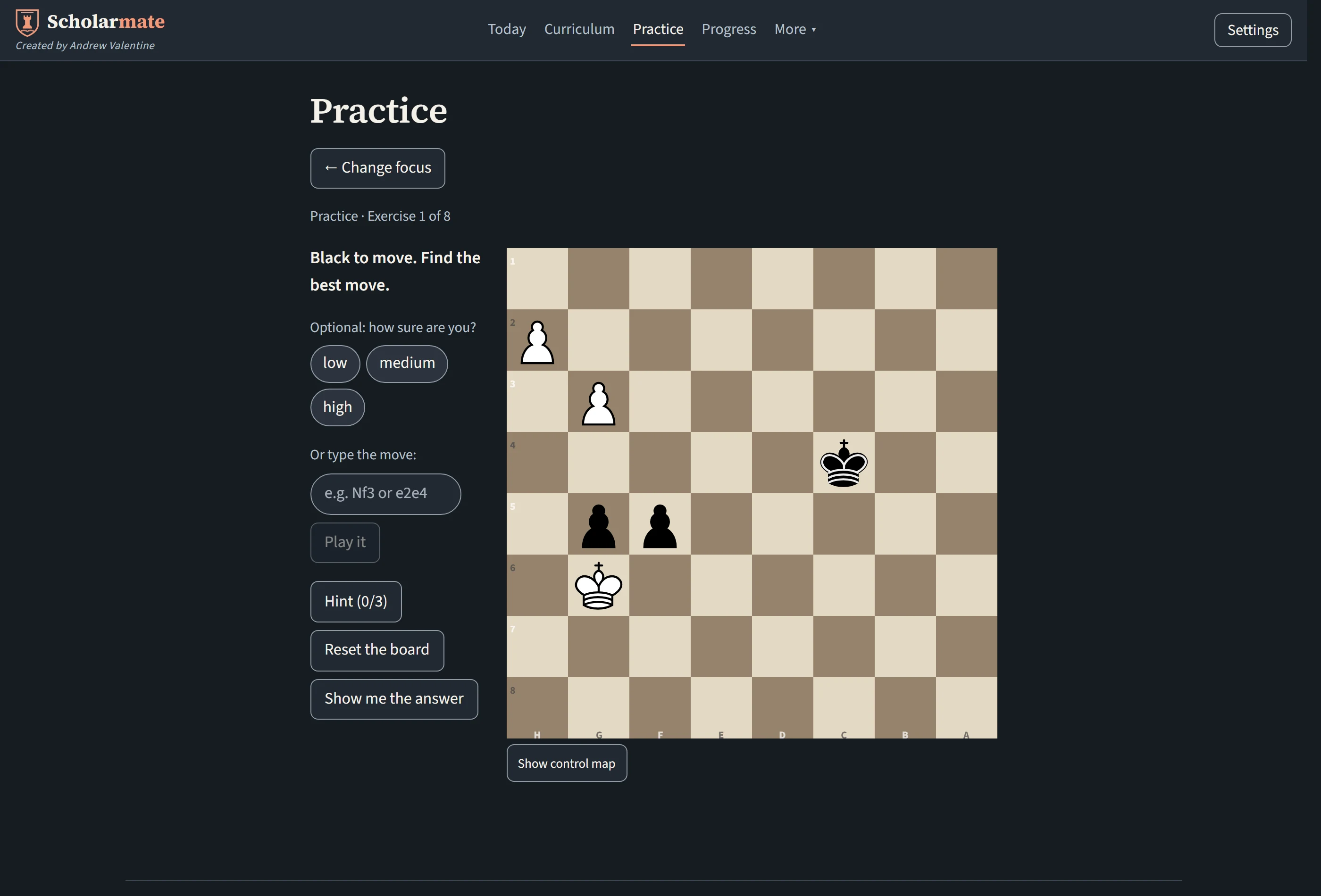
Most practice bots are an engine with the strength turned down, so their mistakes are artificial. Maia is different: it was trained on millions of human games to play the move a person of about that rating would play, from about 1100 to about 1900, so the mistakes are the ones you will meet at the board.
The rating is approximate. It describes the games the network learned from, not a measured strength, and the app says so. Beating a bot does not prove you would beat people.
It is yours, including the data
No account, no server, no database. Progress lives in your browser and the settings page exports it as a single file, which is both the backup and the way to move to another device. Close the tab in a private window and it is gone, by design.
After the first visit it works offline. The engine is WebAssembly running on your own machine, so practice does not depend on anyone's server staying up — or on me still being around to pay for it.
Where it is now
Open beta. It is complete enough to learn from and is being tested in the open; expect rough edges, and expect content to keep being corrected.
If you find something wrong — a position that does not hold up, an explanation that misleads — that is the single most useful thing you can send me.
Built with
- React
- TypeScript
- Vite
- chess.js
- Chessground
- Stockfish (WebAssembly)
- Maia (ONNX)
- IndexedDB
Last updated 2026-11-07
Created by
Andrew Valentine
Andrew Valentine trains, coaches, and writes about the mechanics underneath the body — and was once a Grandmaster-level StarCraft II player.
More from Andrew
Homeostasis
A whole-life operating system: the future you want, connected to what you do today.
Ongoing · limited roster · training, nutrition and life
One-to-one coaching
Direct coaching for people who want to be told what to do and why. Training, nutrition, scheduling, and the rest of the life around them — how you spend a day, how you carry yourself, how you approach people — built as one system rather than separate plans that quietly contradict each other.
One-to-one · single sessions or ongoing
Dating & game coaching
Coaching on the part of life most advice gets backwards: attraction, approaching, conversation, and what actually governs how men and women respond to each other. How you present yourself, how you carry an interaction, and how you handle what happens next.
Single session · any subject
Advice
A straight answer to whatever you are stuck on — training, nutrition, dating, a decision, a business, a system that is not working. Bring the question and the context; get my answer and the reasoning behind it.
Digital · spreadsheet + guide
Strength programming
A calculated progression you can actually run: undulating loading, explicit progression rules, and automatic weight calculation, so every session already knows what it is asking of you.
Writing · 2026-09-26
A short guide to running a useful experiment
Field Guide Nº 3. One change, a fair comparison, and something you can learn from it — including the sessions that disappoint you.
Writing · 2026-09-25
A flowchart for Jeff Rockwell's Sit-Up Escape System
One page mapping the whole system — the core path, the escapes that branch off it, and where each one hands off to another. A review aid for people who already own the instructional.
The Valentine Dispatch
Follow the whole project.
New writing, training notes, and first word when the programs open. One list, sent when there is something worth sending.